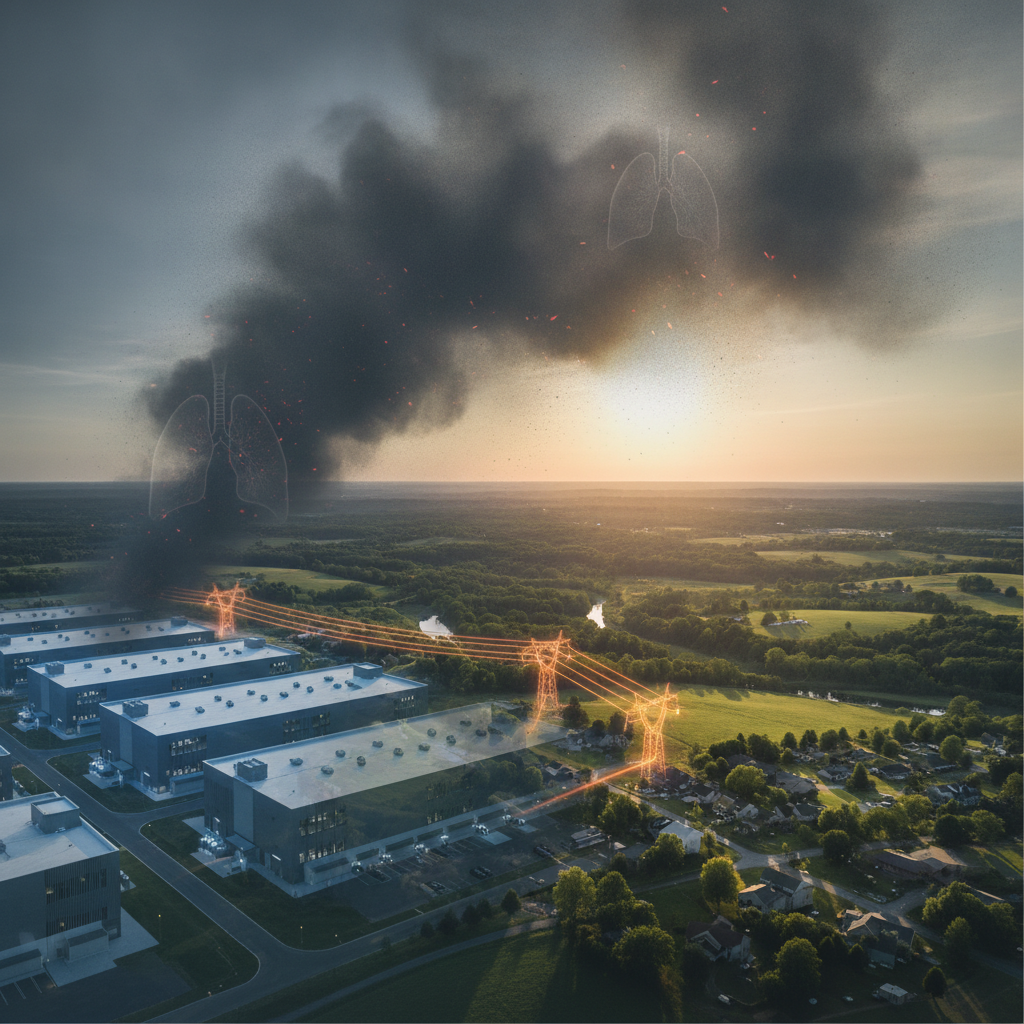
Virginia has become one of the country’s most important data center hubs, but the industry’s growth is also drawing new scrutiny from regulators and local communities. As outlined in a recent Politico report, the debate is no longer just about land use, electricity demand, and tax revenue. It is increasingly about air pollution, public health, and the environmental cost of powering and cooling large-scale digital infrastructure.
Why Data Centers Are Facing More Environmental Attention
Data centers are essential to cloud computing, streaming, online commerce, financial systems, and artificial intelligence. But they are also energy-intensive facilities that rely on electricity around the clock and often require backup generators to maintain operations during outages or maintenance events.
That combination has placed them under growing environmental review. When a cluster of facilities is built in one region, the cumulative impact can matter as much as any single site. Communities near dense data center corridors may worry about diesel emissions from backup systems, increased power demand on the grid, and the possibility that more infrastructure will follow once a region becomes a technology hub.
The Virginia case matters because the state has become a national test for how to balance digital expansion with environmental oversight. Regulators are now being pressed to determine how much pollution is acceptable, what level of review is needed, and whether current permitting systems are equipped to handle an industry that has grown quickly and often quietly.
The Health Concerns Behind The Debate
The public health concerns associated with data centers are tied less to the servers themselves and more to the equipment that keeps them running. Backup generators, commonly powered by diesel or other fossil fuels, can emit nitrogen oxides, particulate matter, and other pollutants that are associated with respiratory and cardiovascular risks.
Those emissions may be limited in duration, but they can still raise concern in communities already dealing with poor air quality or nearby industrial activity. The issue becomes more complicated when multiple facilities operate in close proximity, or when a region adds enough load that more generation is needed to support the grid.
For residents, the question is not whether data centers are useful. It is whether the health costs have been fully considered and whether those costs are being fairly distributed. Environmental justice advocates often argue that the communities closest to large industrial facilities should not bear the burden of pollution while the benefits of digital infrastructure are enjoyed elsewhere.
What Regulators Typically Examine
When agencies evaluate pollution from data centers, they often look at several core issues:
- The type and number of backup generators on-site
- Expected frequency and duration of generator use
- Emission control technology and fuel type
- Cumulative impacts from nearby industrial or energy facilities
- Compliance with state and federal air quality standards
Those details matter because the environmental footprint of a data center is not always obvious from its exterior. A facility may appear quiet and low-profile while still producing meaningful emissions during testing, outages, or peak demand events.
The Policy Challenge For Virginia
Virginia regulators are facing a broader policy question: how should the state regulate an industry that is economically valuable, strategically important, and environmentally consequential all at once?
Data centers bring investment, jobs during construction, and property tax revenue. They also support the digital services used by households, businesses, schools, and government agencies. For state officials, that creates pressure to maintain a climate that is attractive to technology companies.
At the same time, environmental regulators must ensure that rapid development does not outpace oversight. If permitting rules are too lenient, communities may experience unintended pollution burdens. If the rules are too restrictive, developers may argue that the state is discouraging investment or delaying critical infrastructure.
This tension is part of why the issue is becoming so closely watched. Virginia is not only managing one industry; it is shaping a framework that other states may study as data center development expands nationwide.
What An Informed Public Should Watch Next
For readers following this issue, several questions are worth watching as the debate develops:
- Will regulators require more detailed emissions analysis for new or expanded facilities?
- Will backup generator use be limited more tightly, especially in dense data center regions?
- Will state agencies consider cumulative pollution rather than reviewing each site in isolation?
- Will community input become a larger part of siting and permitting decisions?
- Will cleaner backup technologies or grid solutions reduce reliance on fossil-fuel generators?
These are not just technical questions. They go to the heart of how a state manages growth in a digital economy while protecting air quality and public health.
The broader lesson from Virginia is that data centers are no longer an invisible part of the internet’s infrastructure. As they spread, they bring real environmental tradeoffs that public officials must address with transparency, technical rigor, and a long-term view of health impacts. How Virginia resolves those tradeoffs may help define the next chapter of data center regulation in the United States.